
Thursday, May 16, 2013

Dangerous Prophecies

 I fully admit to being an energy wonk and this week I have been engaged in an intensely wonkish activity, reading government energy reports from the Energy Information Administration, which is about as wonky a bureaucracy as you could ever hope to find.  The EIA is the division of the federal Department of Energy that is responsible for tracking, reporting and forecasting energy use within the U.S.  I have been perusing the latest EIA forecasts for energy through the year 2040, in other words a 27 year forecast.  The experience has actually gotten me a bit riled up, which is probably surpising, given how truly dull the data is.
What's bothering me is that the EIA forecasts appear so completely out of touch with what is going on in the energy world today, especially renewable energy.  The EIA Annual Energy Outlook for 2013 forecasts a world in which they basic energy mix of the United States remains relatively unchanged for nearly 30 years, a rather depressing future that only oil companies could love!
 
For example, according to the EIA forecast by the year 2040 the United States will be using less coal to generate electricity than it does today(42%) which is a good thing.  However, it projects that way out in 2040 we will still be getting 35% of  our electricity from burning coal.  My initial reaction to this was, "What, you think we are all suicidal?"  I mean think about it, 27 more years of spewing coal into the atmosphere! 27 more years of poisoning the land with strip mining and coal ash.  By that point global warming would be so bad we could go sunbathing in the arctic!  Seriously, how could the EIA presume that in 27 years, with renewables getting cheaper every year, that we would continue to use coal to generate the bulk of our electricity? I wonder what the EPA thinks of this type of forecast!  The EPA has recently cracked down on the types of emissions new coal plants can produce and appears ready to put out equally strict emissions standards for existing coal plants.  Wouldn't it be far more logical to presume that these EPA regulations will significantly reduce the use of coal for generating electricity?
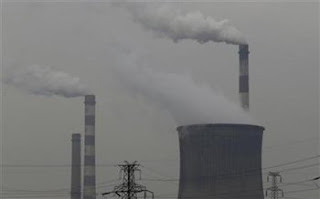
The problem with this recent IEA forecast is not only that it flies in the face of environmental reality, it flies in the face of economic reality.  The cost of using coal to generate electricity is already more than using either natural gas or renewable energy, even more so if you count the cost of the damage that coal does to our environment and health.  Moreover, all the data suggests that coal reserves are progressively getting more expensive to mine, not less. The EPA emissions regulations will probably also drive up costs for those plants that might try to reduce their emissions, rather than shutting down.  Given these increased costs why would we presume that the U.S. will continue to use a more expensive energy source for the next 27!

A Poor Track Record

The EIA doesn't have a particularly good track record when it comes to forecasting.  It completely missed the change in oil demand brought on by the growth of countries like India and China.  It also missed just how expensive oil would become given increasing global demand.  So in that sense I shouldn't be surprised that they seem to be missing the forecasts once again.  What bothers me the most about these reports is the ways in which they seem to dismiss renewable energy without any real justification.

For example, the report uses as a premise that federal tax credits for renewables will expire in 2016 and will never be renewed.  Huh?  On what basis does the EIA make this assumption?  Support for energy tax credits has been growing and attempts to kill them, such as when some members of Congress recently tried to make Wind tax credits part of the sequester, got completely rejected because the Republican congressmen from the plains states know just how fantastic renewables have been for their economy.  Why therefore should we presume that tax credits will expire and never be seen for the next 25 years?

Similarly, the report seems to totally discount the effect that state level Renewable Portfolio Standards (RPS) could have on renewable energy expansion.  The report says "...they have been relatively quiet in terms of state program expansions."  Again, I gotta say "Huh?"   State level RPS programs have been going gangbusters for the last decade and several states such as California and Colorado have even increased their renewable energy targets given how successful they have proven to be so far. And people are starting to notice that the states with RPS programs are having the greatest overall economic success.  Therefore why would we make energy forecasts assuming that all of the states will suddenly abandon their RPS programs?

Self Fulfilling Prophecies

OK, I realize many of you are probably thinking, so what if EIA got the forecasts wrong.  Prognosticators always get things wrong.  True!  However, it is also true that forecasts and predictions can quickly become self-fulfilling prophecies.  That is true not only in the negative sense but in the positive sense as well.  Predict good things will happen and more often than not they do.  Heck, this is part of the reason why Renewable Portfolio Standards work so well.  We presume a specific target for reducing our fossil fuel dependence, and sure enough the regulations and other efforts needed to make it happen, do happen. 

This is why we need to keep on the EIA about getting these forecasts right.  If they are going to project a dim, never ending fossil-fuel future they should be pushed to justify it, less we all become caught up in a future that we don't want to live in!


Monday, March 4, 2013

The New Battlefield in the Energy Wars

The somewhat geeky looking guy in this picture is Jonathan Small a registered lobbyist for the giant oil and gas conglomerate known as Koch Companies Public Sector LLC.  In other words he is a shill for the Koch brothers.  And in this picture (provided by Andy Marso of the Capital Journal) he is attending a public hearing of the House Energy and Environment Committee for the state of Kansas. 

It clearly an understatement to say that the Koch brothers and their compadres in the oil and gas industry are busy in the political arena and one of the places they have been most active has been in the state legislatures.  Why, you might ask?  Because that is where they can have the greatest influence in countering the rapidly growing strength of the Renewable Energy industry.  Despite their Red State leanings, renewable energy is just going plain gangbusters in the plain states like Kansas, and this scares the bajeeezus out of guys like the Koch brothers.

Kansas now ranks 3rd in the overall United States when it comes to wind energy, just behind California and Texas.  Kansas has lots of wind, and thanks to to an aggressive Renewable Energy target it set in 2009, it is making huge strides in reducing the state's dependency on coal and foreign oil.  The Wind industry in Kansas is now generating over $3 billion dollars in investments, has generated 13,000 jobs,  and is making lots of friends among farmers who have discovered that wind is an easy way to hugely increase their revenue without having any negative impact on their existing farming and ranching activities.  Wind energy is a total win-win for the people of Kansas but not for the oil companies so that is why the Koch brothers intend to put a stop to it. 

One of the ways the Koch brothers are going after renewable energy is to knock down the Renewable Energy Standards (RES) that have allowed Kansas to build such success. They sponsored two bills, one in the state House (HB 2241) and one in the state Senate (HB 82) before the Kansas legislature which were designed to water down the renewable energy standards.  The current Renewable Energy Standard says that the state utilities must get 15% of their energy from renewable sources by 2016 and 20% by 2020.  The state has been making great progress towards those laudable goals but the new bill being sponsored by the Koch brothers would extend the 15% benchmark by two years and eliminate the 20% benchmark all together.  Heaven forbid that a state should get 20% of its energy from non-polluting, non global warming resources!

Now For the Good News!

So before I go much further let me bring you the good news. Both bills in the Kansas state legislature were defeated, though by fairly narrow margins!  So the good guys one this round.  However, now is not a time to be overconfident!  A few more votes the other way and the progress Kansas has made would have been defeated.

The battle for our environment won't always be fought in big battles or standoffs in Congress with CNN and the other media hanging on every word.  Most of the real work for the environment gets done quietly at the state and local level and what is happening in Kansas is a perfect example of this.

One of the things I find fascinating about all of this is that the oil company manipulations are happening right out in the open.  Rep. Dennis Hedke, the Chairman of the Kansas House Energy and Environment Committee readily admits that he met with the Koch brothers lobbyist, Jonathan Small to "talk about the merits of the bill." To those who know Rep. Hedke such meetings should hardly be a surprise. When not doing his legislative gig Hedke is a contract geophysicist with a client list that includes 30 regional oil and gas  companies.  He has long been at the beck and call of the oil lobby and recently proposed a law requiring Kansas science teachers to teach students “evidence which both supports and counters” the science of climate change.  Given this level of scientific reasoning one can't help but wonder if a bill to have students debate the arguments for and against gravity is next!

The ugly reality is that state legislators are a whole lot easier and cheaper to buy than federal legislators so it is hardly surprising that the battle for the environment is being fought hard on the state front.  If we are going to solve global warming and protect our survival as a species, it is up to citizens to be diligent, not only in following federal environmental politics, but state politics as well!

Friday, January 18, 2013

Good News for the Bad News Weary

This has been one of those weeks where the regular news has seemed overtly depressing.  In particular, the knee jerk right wing reaction to Obama's utterly sensible gun control recommendations had put me in a bit of funk.  It was the kind of primitive reaction that makes me wonder if going with homosapiens as opposed to neanderthals was a particularly good idea.  So instead of just looking at the blamestream news I turned my attention to the many Energy News streams that I subscribe to.  What a pleasant change!

In looking at the Energy News stories nearly every one was brimming with positive solutions and even more positive progress.  One of the stories had to do with the progress the province of Ontario has made in eliminating coal-burning electric plants and, along with it, most of its air pollution.  Ontario's  Premier Dalton McGuinty last week announced that by the end of this year the last two large-scale coal-fired generating plants will close, leaving only a small backup facility in Thunder Bay operating until the end of 2014. The elimination of these coal-plants is the result of a ten year plan introduced back in 2003. 

A significant part of Ontario's energy progress has been because of the dramatic increase in the use of wind energy in the region.  Renewable energy has allowed this transition to occur while significantly reducing the region's carbon footprint. Tim Weis  of the Pembina Institute said that greenhouse-gas emissions from Ontario's electricity sector have fallen from 40 million tons to 10 million ton in the last decade.

At EB we are huge fans of the wonderful progress the U.S. military has made in implementing renewable energy.  This week that progress continued when the U.S. Army dedicated its largest solar photovoltaic system yet, located at White Sands Missile Range in New Mexico. The installation will generate approximately 10 GWh of electricity annually and provide an estimated annual savings of $930,000. The array will supply approximately 10% of the total power used at the site. The system is also the world's largest low-concentration photovoltaic solar power plant ever implemented.


Finally this week, a group of prominent U.S. investors, including Google, announced that it is moving forward with the construction of an ambitious $5 billion undersea transmission line that will connect future offshore wind farms along the mid-Atlantic coast.  As we have often mentioned at EB, one of the primary factors limiting the deployment of renewable energy projects is the lack of electricity transmission resources.  This project is tackling one of the biggest, a complete lack of transmission resources for off-shore wind farms on the east coast of the United States. 

The first segment of the project, which will occur in three phases, includes construction of a 189-mile transmission cable along the New Jersey coast. Coordinators of the project, known as the Atlantic Wind Connection, say the cable would deliver more than 3,400 megawatts of electric capacity from future offshore wind projects to three locations in New Jersey. Construction is expected to begin in 2016, according to the sponsors. The project intends to eventually link offshore wind farms with electricity grids from Virginia to New York.

Go Google go! 


Monday, November 5, 2012

Sandy Reminds Us of the Real Energy Decision

I admit to being a bit of a political junkie and I have closely followed the presidential election throughout the last year, constantly looking to see what the candidates had to say about the energy issues which are so important to me and to the people who follow the EnegyBible.com web site.  And frankly it has been a big disappointment from both presidential candidates!  That doesn't mean that there aren't stark choices between the two candidates.  Their positions are dramatically different when it comes to energy policy.  Its just that the energy issues they talked to were at best peripheral to the energy issues we should really be talking about. 

The candidates talked about gas prices, as if the U.S. didn't already have the cheapest gas in the world and as if any president could actually control gas prices.  Romney talked a lot about the failure of  Solyndra but conveniently failed to mention the other DOE renewable energy investments, 92% of which were hugely successful.  They both talked a lot about energy independence, as if America, which is 13th in the world in oil reserves, was ever going to outproduce Arab oil sheiks.

The one thing they didn't talk about, but should have, is how our fossil-fuel centric oil habits are rapidly destroying our planet!  This is, in fact, the biggest energy issue facing not only the United States but the entire world.  However, sometimes, despite the fact that politicians work steadfastly to avoid certain issues during an election, reality actually intrudes.  And the reality this year was hurricane Sandy!

Right now there are millions in the northeast who are still without power, a week after this terrible storm.  There are thousands who have lost their homes or suffered severe storm damage.  There are entire beach communities that find themselves not near the ocean but actually in the ocean, and the entire New York and New Jersey coastline has been permanently rearranged. And suddenly, finally, it has actually occurred to a few political leaders that maybe that global warming thing that all the scientists have been talking about for a decade may be something that they should pay attention to. 

Folks, global warming is real and the effects of it have already begun hitting America and hitting us hard.  From the worst drought in U.S. history to the most damaging hurricanes ever to hit our shores.  It's all real and no amount of conservative political correctness is going to change that!  Therefore, we have a choice, to continue to support those who support renewable energy, or to continue to indulge in the drill-baby-drill oil-centric policies that will  be our planet's undoing. 

We strongly endorse President Obama in this election and the energy platform of the Democratic party.  Our reasons are as follows:
  1. Under President Obama the use of renewable energy in the United States has more than doubled, thanks greatly to his supportive policies
  2. President Obama has consistently supported incentives for both solar and wind energy.
  3. President Obama directed the DOE energy grants that, despite all the hype about Solyndra, were hugely successful in driving investment and development of renewable energy.
  4. President Obama allowed the EPA to actually do their job and begin enforcing the Clean Air Act.  This has resulted in badly needed carbon dioxide emission regulations which will reduce pollution from coal-burning power plants.  Romney has opposed all EPA regulations.
  5. The President has consistently opposed giving $4 billion dollars in unnecessary tax breaks to the big oil companies at a time when they are making obscene profits.
  6. President Obama worked with global car manufacturers and got agreements on a new set of fuel standards will greatly improve auto fuel efficiencies. Romney opposed those fuel standards.
  7. President Obama deferred the Keystone Pipeline which had the potential to damage huge areas of land and has opposed drilling in the Arctic National Wildlife Refuge.
We strongly urge you to take a detailed look at the energy platforms of both candidates.  And above all, go out and vote!!


Tuesday, September 11, 2012

Solar Shines Despite Politics

We've just finished both the Republican and Democratic conventions where there was almost nothing said by either party regarding renewable energy or any other environmental issue for that matter.  The Republicans snuck in an occasional "Solyndra" reference as if just saying the word was enough of a condemnation to stick it to the Democrats.  Obama made a passing reference to renewable energy in his address though he pretty much took all of the value out of it by, in the same breath, referencing the mythical energy source called  "clean coal".

Overall, discussion of energy and environmental issues were kept in the background at both conventions and instead the focus was on economic or cultural issues such as abortion or women's rights.  Nonetheless, the great thing about reality is that sometimes things move ahead even when it is politically incorrect to do so.  For example, PG&E, the largest electric utility just announced that its newest solar energy plant, Agua Caliente, is now online and producing over 250 megawatts of energy.  This solar photovoltaic (PV) power plant located in Yuma County, Arizona  has created more than 400 jobs for the local economy.

PG&E has also announced that it has signed a contract with SunPower for the production of a new 100 megawatt solar power plant in Kings County California to be called the Henrietta Solar Project.  I find this particular energy project fascinating.  Normally the price utilities pay for electricity production contracts is kept secret.  But PG&E was required to file some reports with the Public Utilities Commission that showed that the contract price is below what they call the 2011 Market Price Referent (MPR) which California has designated for all electricity contracts.  That means that the 20 year locked in price for the electricity from this solar power plant is going to be below the MPR price of  10.4 cents per kilowatt hour.  This is an astoundingly low price and shows you how far the price for utility-scale solar energy has dropped.  This is less than what it would cost to get the electricity from a natural gas-fired plant. 

This is of course good news for consumers and a validation for our yuppie Governor Jerry Brown.  However, I wonder how this news would have been received if our Governor had been someone like, say, Mitt Romney.  I can just imagine the conversation:

Bob:  (PG&E VP):  Governor, so nice of you to call.  What can I do for you?

Mitt:   Well, I heard that you are about to sign an agreement to put up some kind of dang solar power plant.  Please tell me that's not true!

Bob:  Why yes, that is true Governor.  I am so excited about it.  We got an incredible deal on the electric rate and it is locked in by contract for 20 years!   That means even 20 years from now our customers will be paying less than what we charge now!

Mitt:   Wait a minute Bob.  Didn't you get the memo?  Solar is bad! Solar is expensive!  My God man, haven't you heard of Solyndra. 

Bob:  Well, yes I have governor but I assure you that the company we contracted with, SunPower, has been very reliable.  They are one of the largest solar panel manufacturers and installers in the world. 

Mitt:   But Bob, you can't trust these solar companies, they might not be here tomorrow (whisper: "At least if I have any say in the matter.").

Bob:  But Governor, the solar panels are provided up front as part of the contract.  They are warrantied for 25 years and they will probably last more than 50 years.  There is no real risk for us.

Mitt:  Risk schmisk. We've been beating the administration up over Solyndra, what do we tell people if we start supporting solar now?

Bob:  Governor, why don't we tell them that we are just serving the public interest by getting electricity from a reliable supplier at low cost.  Isn't that what we are supposed to do?

Mitt:  No, this is no good.  People will think that I've flip-flopped again, not that I ever really have of course.

Bob: (suppresses chuckle)

Mitt:  Why don't we use a "clean coal" plant instead.  People like the sound of "clean coal".

Bob:  We looked at that Governor but we couldn't find any. Nobody has actually ever built a clean coal plant that is economical, and no coal company was willing to guarantee us a price like this for electricity for twenty years! 

Mitt:  Bob, you are just not getting the big picture here.  Solar is out, its politically incorrect.  It's just unAmerican.

Bob:  But Governor, why is it unAmerican.  The solar panels are manufactured right here in our state and building the solar plant will provide over 200 jobs for Kings County!

Mitt:  (hmmmm)  Jobs you say?  I like jobs. 

Bob:  Yes sir, good jobs.  And Governor, the plant is going to be placed on unusable land that has been over farmed.  The land wasn't producing much anyway and there are no endangered species to disturb so you shouldn't have any problems with the environmentalists. 

Mitt:  No environmentalists, I like that even better.  But could we hire just a few so I could fire them.  I like to fire people!

Bob:  You got it Governor!  Whatever you want!  I appreciate your leadership in this.

Mitt:  Yep, that's me Bob.  I'm a leader!


........ Well, it could happen


Sunday, June 3, 2012

The Good, the Bad, and the Butt Ugly!

Distributed Solar in Germany
The last few weeks have been an interesting mix of both good and bad news when it comes to issues like energy and global warming. Being fundamentally an optimist at heart, I think I will start with the good news which begins in Germany. Germany has long been a leader in the use of solar energy despite the fact that they are not exactly a hotbed of solar saturation. As the cost of solar energy continues to plummet their investment in solar energy is starting to pay major dividends. Last week they hit a huge milestone when the measured output of their solar systems peaked at 22 gigawatts of electricity which was more than half of all the electricity used in the entire country that day.
Think about it. One of the most heavily industrialized countries in the world got half of all their daily electricity from solar energy. That means they paid half as many millions to some oil sheik who hates them, they cut their contribution to global warming by half, they reduced air pollution by half, they needed half as many oil tankers to feed their fuel addiction and they kept twice as many of their hard-earned marks at home instead of having to buy energy from a foreign country. It's genuinely a big deal!

In the United States, which gets 1% of its electricity from solar energy, the use of solar is still treated as an afterthought by most energy brokers. But it doesn't have to be that way! The U.S. has far more solar resources than Germany. We could easily be producing twice as much solar energy as Germany does.  Instead of beating up a growing industry because one company failed (Solyndra) while hundreds of companies succeeded, we could be providing the same kinds of incentives that helped Germany have such incredible success. We could renew the federal solar and wind incentives. We could be opening up federal lands for solar and wind farms instead of turning them over to oil and gas companies to destroy with their fracking and oil spills.

Having a significant solar infrastructure has given Germany options and advantages which other countries do not have.  When the Fukishima disaster brought to people's attention the incredible risks involved in nuclear energy the leaders of Germany were able to immediately put in place a plan to phase out all of its nuclear plants. In fact, the 22 gigawatts of solar capacity Germany now has is equal to about 20 nuclear reactors.  Japan, which had to close its nuclear plants following the political upheaval following Fukishima, is going to struggle much more than Germany with closing its plants.  They do not have the renewable energy infrastructure to fall back upon and our paying through the nose to suddenly import even greater amounts of coal, natural gas and fuel oil to handle short-term electricity demand.  This is something the U.S. should keep in mind as we begin looking at all of our aging nuclear plants. 

So much for the good. Now for a milestone of a different kind.  Measurements of greenhouse gasses in the arctic this spring have now been found to show carbon dioxide levels well above 400 parts per million.  This is up from 390 parts per million just a few years ago. Not only is the total accumulation of carbon dioxide increasing but the rate at which we are putting carbon dioxide in the atmosphere is increasing, not getting better.

How do we know this.  We know this by measuring ice samples.  Carbon dioxide levels in the arctic are trapped in ice and scientists have been carefully measuring them for many years.  Based on their research we now know that levels of carbon dioxide this high have not been seen for over 800,000 years.  The data clearly shows that global warming is not a short term cyclic phenomenon but a direct consequence of our polluting our atmsophere with carbon dioxide.

Fortunately, the people of North Carolina need not worry about pesky problems like global warming.  The North Carolina Republican-controlled legislature is taking care of that problem.  You see, the state's Coastal Management Commission was trying to (gasp) actually do some management and planning and was recommending adjustments in how the North Carolina coastline should be managed in the future based on sea rises caused by global warming. The current scientific data was telling them that they should be managing coastal properties based upon estimates of a 4 to 6 foot rise in sea levels by 2100 or possibly even higher. The data was absolutely clear that the rate at which sea levels are rising is accelerating due to global warming. 

However, the North Carolina legislature, rather than admit that global warming is real is now ciriculating a bill mandating that the agency must, in its reports, "not include scenarios of accelerated rates of sea-level rise."  In short, it is mandating that the facts be ignored, truly butt ugly behavior if ever I have seen it.  I have to admit that behaviors like this that make me wonder if mankind actually deserves to survive.  When we are so afraid of the truth that we would rather mandate ignorance than face it, then we are almost certainly on the path to our destruction.  Oh, well, maybe tomorrow will be a better news day.  Like I said, I am an optimist at heart!


Wednesday, March 7, 2012

California Renewable Energy Targets are Working

California has one of the most aggressive renewable energy targets of any state in the U.S. The type of standard California uses is called a Renewable Portfolio Standard (RPS). What this means is that all investor owned utility companies, such as PG&E or SMUD, must get a certain percentage of their electricity from a renewable energy provider. That source could be a privately held 3rd party energy company such as a hydro-electric plant, solar farm or wind farm operator. It could also come from solar or wind farms that are owned directly by the utility.

In 2011 California passed Senate Bill 2 (SB-2) which raised the portfolio standard from 20% renewables to 33% by 2020. This move was seen as exceedingly ambitious by many renewable energy critics and was quickly discounted as just a political ploy. However, what these critics failed to grasp is that RPS standards actually work! This week PG&E, California's biggest investor-owned utility announced that it is making significant progress towards meeting this demanding target. PG&E stated that for 2011 it had generated more than 19.4% of its energy from completely renewable energy sources including wind, solar, geothermal, biomass and small hydro-electric sources. Furthermore, PG&E says that it is completely on track to hit the 33% RPS target by 2020.

Since 2002 PG&E has signed more than 110 contract for energy from renewable energy contractors. That's about 10,000 Megawatts of energy! Moreover, PG&E has been able to do this without having to increase the price it pays for energy. Many citizens do not realize that in 2012 modern renewable energy power plants such as wind farms and solar farms are completely cost competitive with polluting fossil-fuel sources such as coal and natural gas when a long-term contract is used. That's because the cost of renewable energy sources are already low and going down, and fossil-fuel and nuclear sources are steadily going up in cost. PG&E has done the math and has seen how much solar and wind sources have come down in cost. For them renewable energy is a win-win. They get the positive public image of supporting non-polluting renewable energy and they completely avoid the risk of price spikes because they have locked in the price with a long-term RE contract. Most fossil-fuel providers won't sign long-term contracts because they know fossil-fuel prices will inevitably increase in the future as supplies begin to dwindle or as speculation drives up the cost (as we are seeing right now with Iran).

The progress California is making towards its RPS goals is incredibly good news. Think about it! The country's largest, most energy hungry state will be getting one third or more of its energy from renewable energy in less than 8 years. This would be an enormous step forward for California and would clearly give it a huge economic advantage over competing states. In terms of GDP California is the fifth largest economy in the world. If California can do this, nearly any other country in the world could do this to. And that, my friend, is the whole point! Renewable energy is real, its big, and its working now, not just in some distant future.

The great success states like California and Colorado have had in using aggressive RPS standards leads to the obvious question of why not have a national RPS, not just a state-by-state standard. National level RPS standards have worked wonderfully for countries in Europe so why not in the United States. This week Senator Jeff Bingaman, a Democrat from New Mexico introduced the Clean Energy Standard Act of 2012, a bill that would try to set nationwide standards for large retail utilities. Unfortunately, the bill does not limit sources to truly renewable energy sources, but includes coal with carbon capture and nuclear power.

We think the idea of having a national RPS is a good one but it needs to be limited to truly renewable sources, not just less polluting sources. Nonetheless, it is a start and it will be interesting to see how it fares in Congress. At least it will get the discussion started and hopefully in a few years our entire country can begin chasing and achieving a national RPS target. Let's go for it!!